Devon Lorenz · 11 October 2026
Examining how notification timing influences engagement spikes in serialized fiction apps
Serialized fiction apps deliver chapters in sequence to readers who follow ongoing stories, and push notifications play a central role in prompting users to return for the next installment. Researchers tracking user behavior across multiple platforms have documented clear patterns where the hour and day chosen for alerts correlate with measurable rises in session starts and chapter completions. Data from mobile analytics firms indicate that timing decisions affect open rates more than message content alone in many cases.
Core mechanics of notification delivery in fiction apps
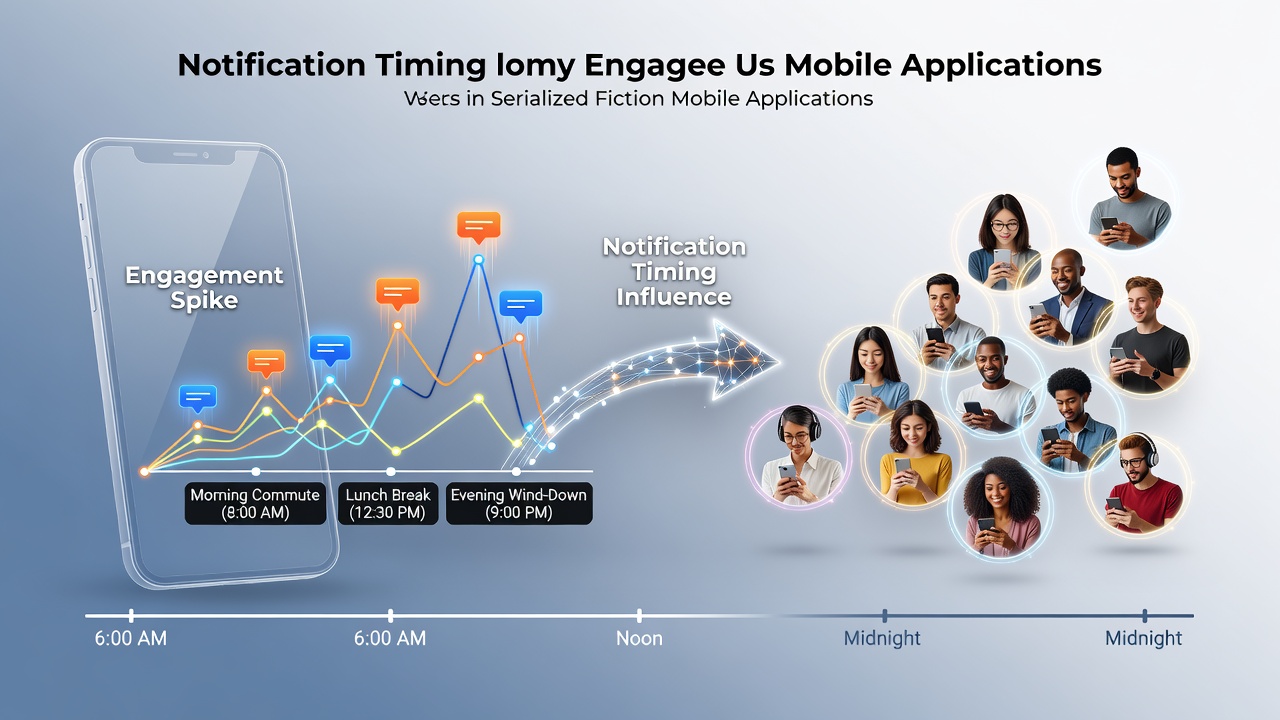
Developers schedule alerts to coincide with new chapter releases or reader milestones, and systems often rely on user timezone data plus historical activity logs to select delivery windows. Studies of app telemetry show that messages arriving when readers typically commute or unwind produce higher tap-through rates compared with those sent during standard work blocks. Platforms collect aggregate metrics on these interactions, allowing teams to refine schedules without accessing individual profiles in many jurisdictions.
One analysis of several North American apps found that evening notifications between 7 and 9 p.m. local time generated engagement spikes averaging 35 percent above baseline daily averages. Similar observations appear in reports covering European markets where post-dinner hours yielded comparable lifts. The same datasets reveal that mid-morning alerts frequently underperform because competing demands from work or school reduce immediate response.
Observed patterns across different time windows
Platforms that segment audiences by region report distinct curves for each market. In the United States, weekday evening spikes remain consistent year-round, while weekend patterns shift toward later morning hours. Australian services note parallel trends adjusted for local time, with afternoon notifications showing stronger performance than those sent at dawn. European Commission digital usage surveys corroborate that leisure-time alignment drives higher interaction across mobile entertainment categories.
Frequency also matters alongside clock time. Services sending multiple alerts within a single day observe diminishing returns after the second message, according to internal platform logs shared in industry briefings. Researchers at several universities have modeled these decay effects and note that spacing notifications by at least four hours preserves response rates more effectively than rapid succession.
Data sources and measurement approaches
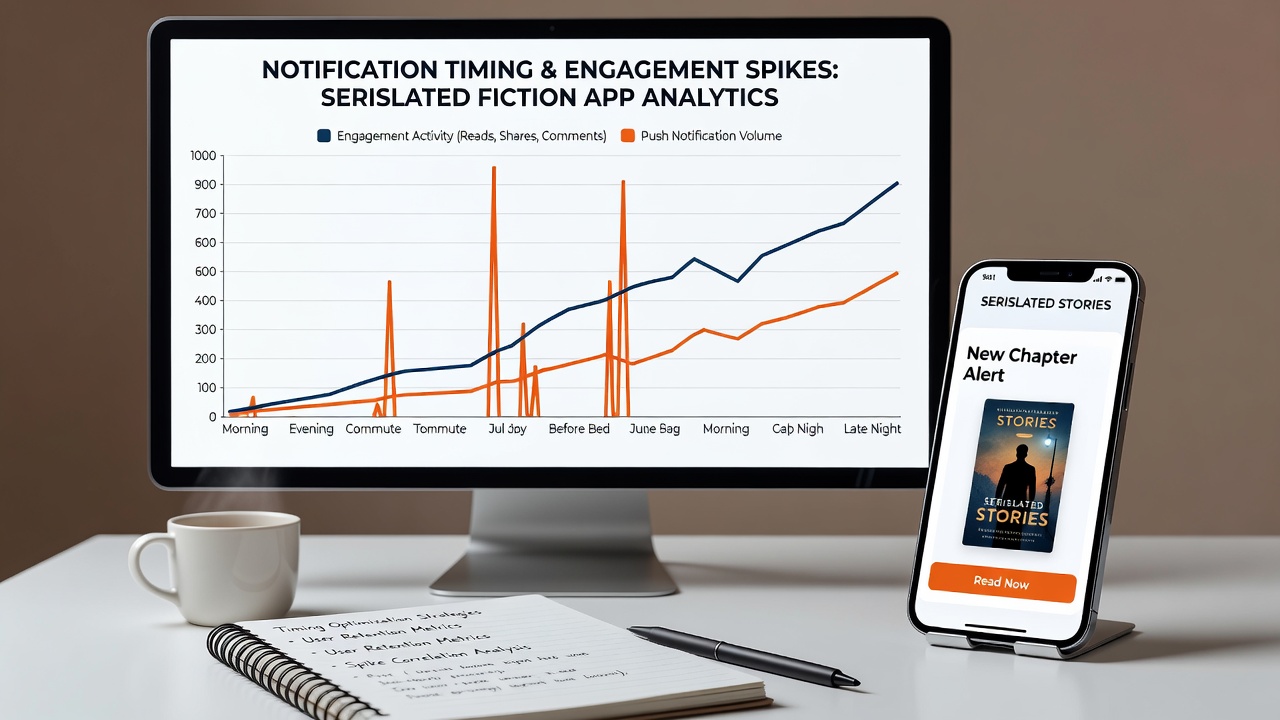
Telemetry collected by app stores and third-party analytics providers supplies the primary evidence base. Figures released by Statistics Canada on mobile application usage highlight that push notification response varies systematically with time of day across entertainment categories. Academic teams in the United States have cross-referenced similar logs with survey responses to confirm that perceived relevance rises when alerts arrive during established reading routines.
One study published through university channels examined six months of chapter-release data and found that notifications timed to user-specific historical peaks increased completion rates for the next installment by measurable margins. The same work compared results across different continents and observed that cultural factors such as typical meal times or commute durations influenced optimal windows. Platforms operating in multiple regions therefore maintain separate scheduling rules rather than applying a single global template.
Timezone handling and personalization factors
Global user bases require careful handling of local time conversion, and errors in this step reduce the intended effect of timing strategies. Services that automatically adjust for daylight saving changes and regional holidays maintain steadier engagement curves, according to aggregated performance reports. Personalization layers that incorporate individual reading history further refine these adjustments, producing additional lifts in session duration for users whose habits deviate from population averages.
What's interesting is how small shifts produce noticeable differences. Moving a notification from 8 p.m. to 8:30 p.m. in one documented case altered open rates by several percentage points across thousands of recipients. Observers note that such granularity becomes feasible only when platforms accumulate sufficient historical data to identify reliable micro-patterns within broader daily cycles.
Trends projected through late 2026
As of October 2026, several major serialized fiction services continue to iterate on timing algorithms that incorporate machine learning models trained on prior engagement data. These systems test incremental variations in delivery windows while holding message text constant, allowing teams to isolate timing effects. Early results shared in developer forums suggest continued gains when models account for both day-of-week and seasonal factors such as school calendars or national holidays.
Regulatory frameworks in various regions also shape how much data can be used for such optimization. Privacy rules in the European Union and equivalent standards in Canada limit certain forms of cross-device tracking, which in turn encourages reliance on anonymized aggregate signals. Services that operate within these constraints still record engagement improvements when timing aligns with observed leisure periods.
Conclusion
Notification timing stands as a measurable lever for driving engagement spikes in serialized fiction apps, with evidence drawn from platform telemetry, government usage surveys, and academic modeling. Patterns consistently link higher response rates to periods that match typical reader availability across different regions and cultures. Continued refinement of scheduling methods, supported by data collected through October 2026 and beyond, allows services to sustain these effects while respecting applicable privacy standards. The documented relationships between clock time and user action provide a factual basis for ongoing platform adjustments in this category of mobile applications.